
 EN
EN Italiano
 Nederlands
 Slovenščina
 Suomi
Suomi
Blackjack Switch Review
 Playtech3.5/5 · Good
 Reviewed by Brett Chatz, Senior Casino Reviewer · Updated June 2026 · 18+
Ad disclosure: we may earn a commission when you visit a casino through our links. Commissions never influence our scores: here's how we make money. 18+.
Play Blackjack Switch Free Demo
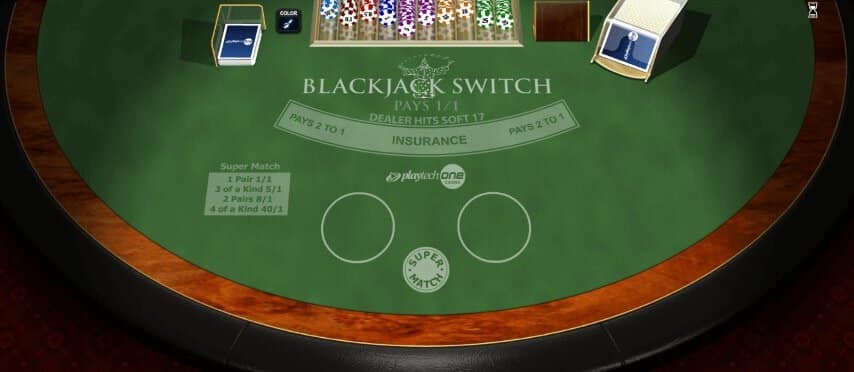
The free demo of Blackjack Switch by Playtech is available right above on this page. No registration, no deposit, just load it up and get familiar with the unique two-hand switching mechanic before you commit real money. We recommend playing at least 50 hands in demo mode to internalize the strategy adjustments this variant demands.
Two Hands, One Twist: Blackjack Switch Rewrites the Rules You Know
Blackjack Switch isn't just another blackjack variant with a cosmetic twist. It fundamentally changes how you approach each round by dealing you two hands simultaneously, and then letting you swap the second cards between them. That single mechanic creates decision trees that don't exist in any standard game. It's exhilarating for strategy-minded players who find conventional blackjack too rote.
If you're looking for a pure live-dealer experience, close this tab now: this is RNG table gaming. If you want the traditional single-hand rhythm, try European Blackjack or the more liberal Atlantic City Blackjack instead. But if you want a blackjack game where card-swapping decisions genuinely shift the house edge, stay right here.
How Blackjack Switch Actually Plays
You place two equal bets and receive two hands. After the initial deal, you may switch the top (second-dealt) cards between your two hands. The trade-off? The house compensates with modified payout rules. Here's the full breakdown:
- Deck Count6 decks shuffled together
- Dealer Rule on Soft 17Dealer hits soft 17. This costs you roughly 0.22% compared to a stands-on-soft-17 game
- Blackjack PayoutEven money (1:1) on naturals. This is the big catch and a significant departure from standard 3:2 games
- Double RulesDouble on any two cards, including after a switch
- Double After Split (DAS)Yes, permitted
- Split/Resplit RulesUp to 4 hands; aces may be resplit but receive only one card each
- SurrenderNot available
- InsuranceOffered at standard 2:1 payout
- Push 22 RuleIf the dealer busts with exactly 22, all non-natural player hands push instead of winning. This is the second major house-edge recoup mechanism
House Edge and Why the Rules Matter
Playtech does not publicly list a fixed RTP for Blackjack Switch, and for good reason: your actual return depends entirely on how well you play. With optimal basic strategy (including correct switching decisions), the house edge sits in the neighbourhood of 0.16%–0.20%, making it one of the most favourable blackjack variants available when played perfectly. But "perfectly" includes knowing when to switch, which adds an entire layer of strategy most players don't master.
Without perfect play, the edge grows quickly. Here's how individual rules shift the math:
- 1:1 blackjack payout vs 3:2~+2.27% house edge, massive, but offset by the switching advantage
- Push 22 rule~+0.56% to the house, dealer busting on 22 no longer helps you
- Dealer hits soft 17~+0.22% vs standing
- No surrender~+0.08% lost opportunity
- Switching privilegeReturns approximately –2.80% back to the player when used optimally
A bad-rules table silently costs more than any bonus ever pays. The switching mechanic is powerful enough to overcome the 1:1 naturals and push-22 rules, but only if you switch correctly every single time.
Basic Strategy Essentials
Standard blackjack basic strategy applies after you've made your switch decision, but the switch itself requires separate study. Here are the critical decisions we flagged in our testing:
- Always evaluate the switch firstBefore hitting or standing, ask whether swapping second cards creates one strong hand and one acceptable hand instead of two mediocre ones. A pair of 15s can become a 20 and a 10. Always switch in that scenario.
- Always split aces and 8s. Never split 5s or 10sThis holds true even in Switch, though you may want to switch a 5 off a pair before splitting.
- Double 11 vs everything except dealer aceThe six-deck, hit-soft-17 rules make doubling 11 slightly less automatic against an ace.
- Hit soft 17 (A-6) vs dealer 7+Only stand on soft 18 or better against strong dealer upcards. Against dealer 3–6, double your soft 17 if the rules allow.
- Never take insuranceIt pays 2:1 on a roughly 9:4 proposition. The math is always against you, period.
- Prioritise making one hand of 20 or 21In our testing, switching to create one powerhouse hand consistently outperformed keeping two "decent" hands of 17–18.
Pros and Cons
Pros:
- The switching mechanic returns ~2.80% to skilled players, producing one of the lowest house edges in blackjack when played optimally
- DAS permitted and resplitting allowed up to 4 hands, generous split rules
- Two-hand format means more action per round and more strategic depth
- The more forgiving variance profile means your bankroll experiences smaller swings compared to single-hand games
Cons:
- Naturals pay even money (1:1): the psychological sting of hitting blackjack and getting paid flat is real
- Push 22 rule eliminates a significant dealer-bust opportunity that players take for granted
- No surrender option: you can't escape bad hands cheaply
- Requires learning an entirely separate switching strategy on top of standard basic strategy: the learning curve is steep
How It Compares
| Variant | House Edge (Optimal) | Key Rule Difference | Best For |
|---|---|---|---|
| Blackjack Switch (Playtech) | ~0.16–0.20% | Two hands with card switching; 1:1 naturals; push 22 | Strategy enthusiasts seeking minimal house edge |
| Blackjack Surrender | ~0.35–0.40% | Late surrender available; standard 3:2 naturals | Conservative players who want an escape hatch |
| Single Deck Blackjack | ~0.15–0.60% | 1 deck; often 6:5 naturals which wrecks the edge | Card-counting practice (check payout first) |
| Spanish 21 | ~0.40% | No 10-value cards; bonus payouts for specific hands | Players who enjoy varied payout structures |
Blackjack Switch occupies a unique position in the blackjack family. It gives back more than almost any other variant, but demands more knowledge in return. It's the chess to regular blackjack's checkers.
Strategy Tips
- Print a switching strategy chart: Standard basic strategy charts won't cover the switch decision. Dedicated Blackjack Switch charts exist. Use one until the correct plays become instinctive.
- Never take insurance, ever: With six decks, the probability of a dealer natural is roughly 30.8%. A 2:1 payout needs a 33.3% probability to break even. You lose long-term, every time.
- Avoid any Blackjack Switch table paying less than 1:1 on naturals: Some side-rule modifications can worsen even the already-reduced natural payout. Read the paytable before you sit down.
- Don't use Martingale or any progression system: Table limits cap your recovery bet within 7–8 losses. With two mandatory equal bets per round, you hit the ceiling even faster in Switch.
- Check bonus terms before wagering on blackjack: Most casino bonuses exclude blackjack entirely or count it at 5–20% toward wagering requirements. Don't learn this the hard way. Read about common casino bonus mistakes first.
Where to Play Blackjack Switch
Playtech's Blackjack Switch is available at most major Playtech-powered operators. We recommend choosing a site with transparent rules, fast cashouts, and fair bonus terms. Here are a few starting points:
- → Browse trusted UK blackjack sites that carry Playtech's full table game library
- → Claim a welcome bonus, but verify blackjack contribution percentage before you play
- → Cash out faster at our recommended fast payout casinos
The Bottom Line
Blackjack Switch is the rare variant that gives you a genuine edge-reducer, if you're willing to study twice as hard.
This game is built for players who already know standard basic strategy cold and want a deeper challenge with a lower house edge as the reward. It's not for casual players who just want to hit and stand, and the 1:1 natural payout will frustrate anyone who lives for the 3:2 dopamine hit. If switching strategy sounds like homework, stick with Atlantic City Blackjack for clean, traditional rules.
Key Facts
| Attribute | Value |
|---|---|
| Provider | Playtech |
| Category | Blackjack |
| Decks | 6 |
| Dealer on Soft 17 | Hits |
| DAS | Yes |
| Surrender | No |
| Insurance | Yes (2:1) |
| Blackjack Pays | 1:1 (even money) |
| RTP (Optimal) | ~99.80–99.84% with optimal basic strategy |
| House Edge | ~0.16–0.20% (optimal play) |
| Min Bet | Table dependent |
| Max Bet | Table dependent |
Responsible Gambling
Blackjack Switch's low house edge doesn't eliminate risk. Set session limits, never chase losses, and remember that two hands per round means twice the exposure per deal. If gambling stops being fun, visit our responsible gambling page or contact BeGambleAware.org for confidential support.
Where to play Blackjack Switch



Blackjack Switch FAQ
What makes Blackjack Switch different from regular blackjack?
In Blackjack Switch by Playtech, you play two hands simultaneously and can swap the second cards dealt to each hand. This switching mechanic returns approximately 2.80% to the player when used optimally. To compensate, naturals pay even money (1:1 instead of 3:2) and a dealer bust on exactly 22 pushes all non-natural player hands instead of paying out.
What is the house edge of Blackjack Switch with optimal play?
With optimal basic strategy, including correct switching decisions, the house edge for Playtech's Blackjack Switch is estimated at approximately 0.16%–0.20%. However, this requires mastering both standard basic strategy and a separate switching strategy chart. Imperfect play increases the edge significantly.
Why do naturals only pay 1:1 in Blackjack Switch?
The even-money payout on naturals is one of two rule changes the house uses to offset the advantage gained from the switching mechanic. Without the 1:1 natural rule and the push-22 rule, the player would have a substantial mathematical edge over the house. Together, these adjustments balance the game while still leaving a very low house edge for skilled players.
What is the push-22 rule in Blackjack Switch?
If the dealer busts with a total of exactly 22 in Blackjack Switch, all remaining player hands push (tie) instead of winning, except for player naturals, which still win. This rule adds approximately 0.56% to the house edge and is a key mechanic that compensates the casino for the switching advantage given to players.
Can I use standard blackjack basic strategy for Blackjack Switch?
Standard basic strategy applies to hit/stand/double/split decisions after you've completed the switch, but it does not cover the switching decision itself. You need a dedicated Blackjack Switch strategy chart that tells you when to swap cards between hands. Skipping this step means you're leaving significant edge reduction on the table.